

-
Share





 Connect


 Read
Read
 Subscribe

Connect
Read
Subscribe
Narrative Writing and Reading Core Skills Lesson Plan, level: Elementary
Narrative Writing & Reading Core Skills Lesson Plan materials required:
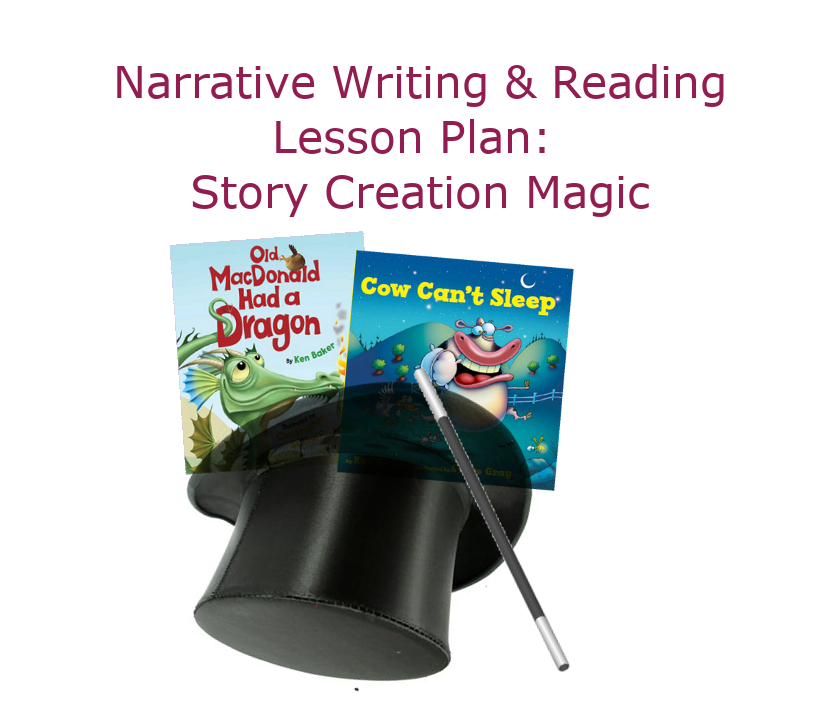
Activity Time for Narrative Writing and Reading Core Skills Lesson Plan: 30-50 minutes
Objective of Narrative Writing and Reading Core Skills Lesson Plan: Teach core curriculum concepts of narrative writing (story creation) through the use of characters, setting, and plot. Also teaches skills needed to meet language arts reading and writing core curriculum standards that require the ability to describe characters, settings, and major events in a story.
Steps for Narrative Writing and Reading Core Skills Lesson Plan
Preparation - Beforehand, the teacher
cuts out the pictures of characters, settings and plot/problems from the Narrative Writing and Reading Core Skills Lesson Plan Handout and places
the pictures inside the top hat. The teacher makes a copy of the worksheet from the lesson plan handout for every member of the class.
Note: If desired, teachers don't have to use the pictures in this handout, but can instead use pictures of their own choosing, which
might consist of pictures of famous heroes or book characters, exotic or fun places, and pictures that illustrate real or imaginary
problems/challenges that children or grownups might face.
Introducing Characters (The story's heroes) - With the top hat full of
pictures placed upside down on a table in front of the class, the teacher explains that creating stories is like magic. When you write a
story, it lets you magically become the hero that saves the day. The teacher then taps the brim of the hat with the magic wand and then
pulls out one or more of the character/hero pictures from the hat. The teacher shows the picture(s) to the class and explains who it is a
picture of if they don't already know. The teacher continues to say that not only do stories let you magically become the book's hero, but
when you write stories you can choose to become whatever hero you want. These heroes are the story's main characters.
Introducing Setting
- The teacher taps the hat again and pulls out a picture of one or more of the fun or exotic places, and then explains
that stories can magically whisk you away to faraway places. These places are called the story's setting. When you write a story you can
transport yourself and your reader to any place or setting that you want. You can let your readers feel like they have really traveled to
that place or setting by describing what it looks like, or even how it smells, feels (i.e. warm, cold, windy, etc), sounds, or tastes (i.e.
salt water) like.
Introducing Plot (The story’s problem) and Story Events - The teacher
asks the class if a character and setting are all that they need for writing a story. After the responses die down, the teacher states that
most stories start with a problem or challenge that the hero must resolve.
The teacher taps the hat again and pulls out a picture of one or more of the challenges/problems. The teacher explains that a story's
problem can be any kind of problem; an ordinary everyday problem or an extraordinary problem. It just needs to make the story interesting and
somewhat believable. The main part of the story will be the hero trying to solve the problem. This main problem is called the story's plot. The
hero will usually need to try a couple of different things to solve the problem. These attempts to solve the problem are also known as story
events. The story usually ends with a major event that enables the hero to finally solve the problem. The teacher explains that the initial
problem, the events that make up the character's journey to try to solve the problem, and the ultimate resolution of the problem all
comprise the story's plot
Reinforce Students Core Reading Skills for Describing Story Characters, Settings, and Major Events
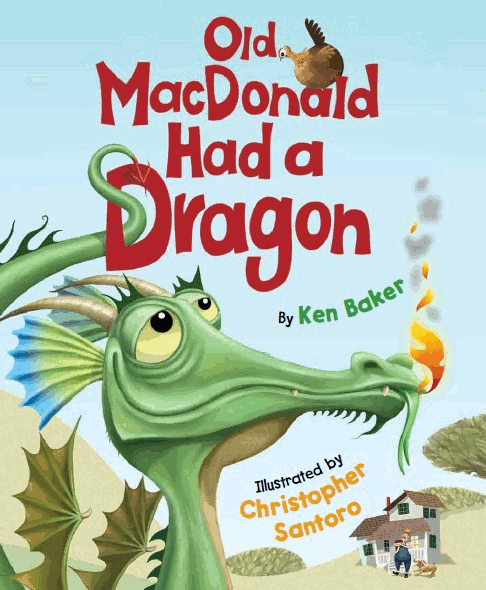
The teacher hands out the pieces of paper and asks the children to try to identify and write down the characters, settings, major events and
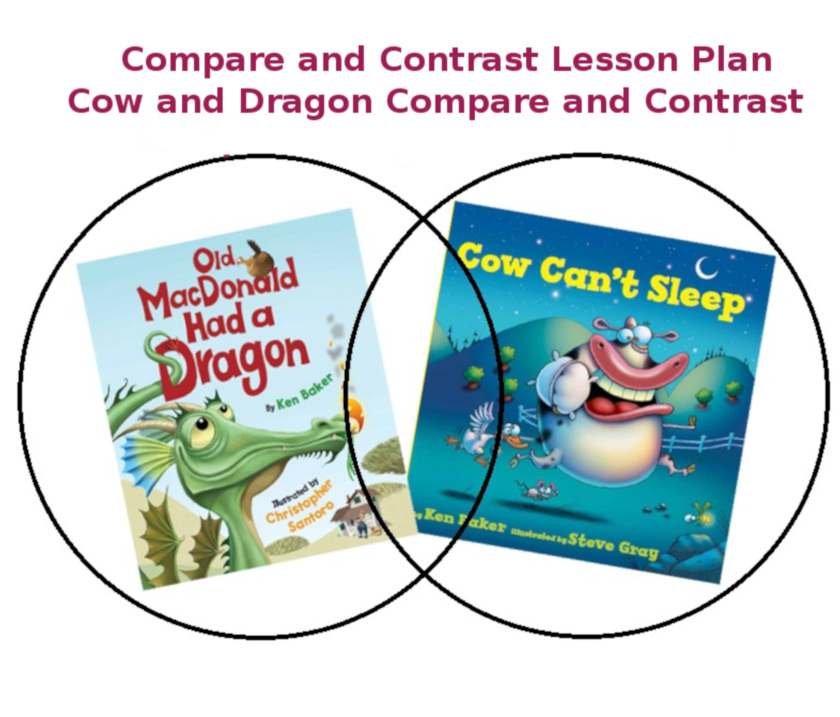
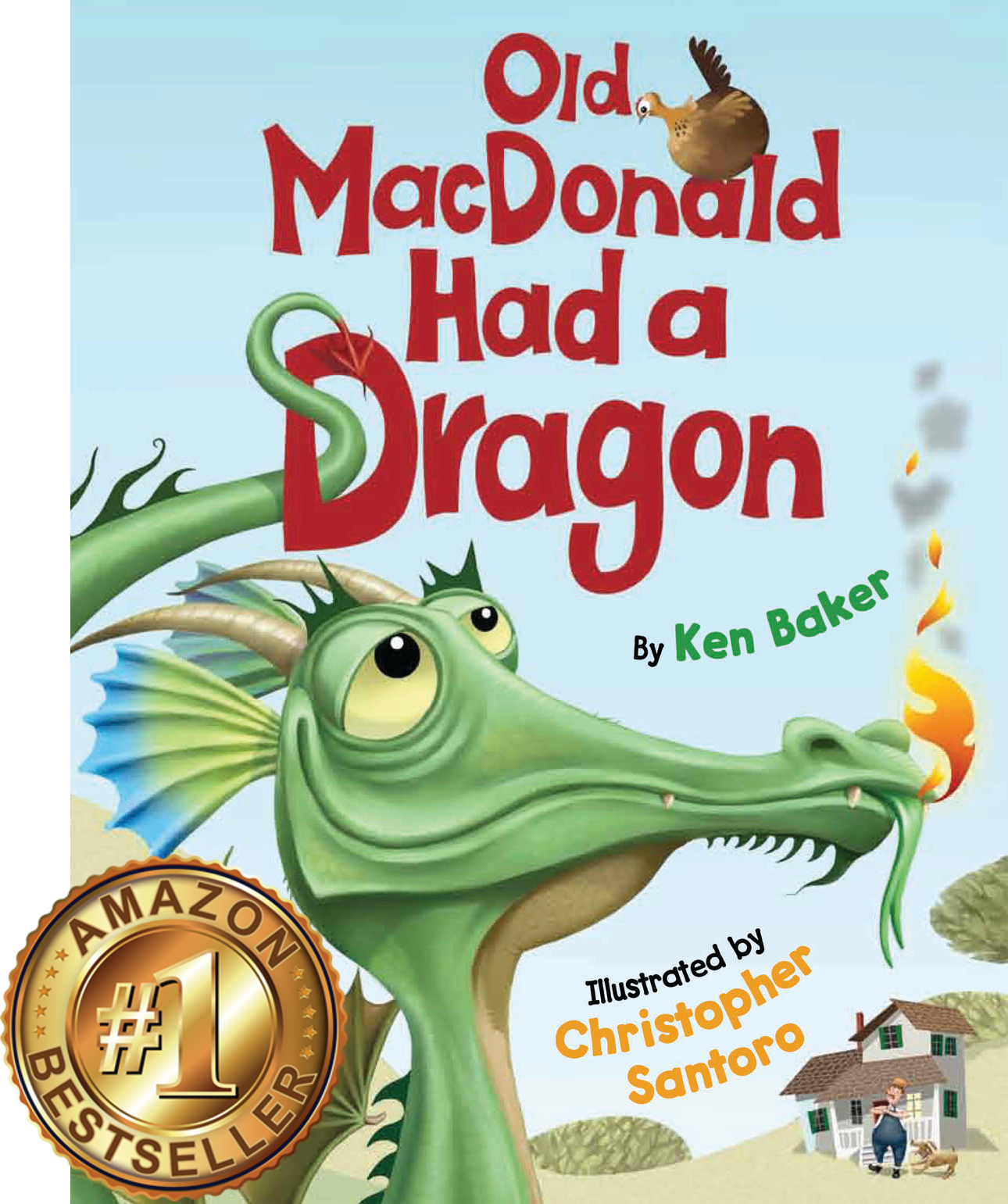
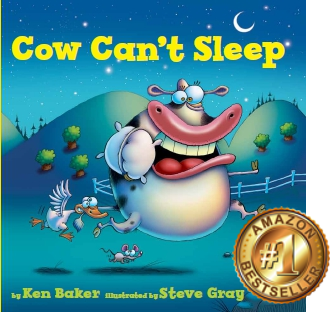
plots in the books OLD MACDONALD HAD A DRAGON and COW CAN'T SLEEP as they individually read each book or as the teacher reads the books to
the class.
Reinforce and Assess Core Narrative Writing Skills - Story Creation Exercises
The teacher leads the class in a spontaneous story creation exercise. The teacher asks the class for suggestions as to who should be the
story’s hero/main character. After the hero is decided on, the teacher asks for setting suggestions and decides on one. After that, the
teacher asks for potential problems/plots. Once the problem/plot has been decided on, the teacher asks the class for different ways for the
main character to solve the problem (story events). The teacher chooses three of these suggestions to make up the story events. One at a time,
she narrates how in the first two events the hero might try to solve the problem with those suggestions, but fails. Then she narrates the
story’s final event using the third suggestion to describe how the hero might ultimately solve the problem.
Next, the teacher instructs the students to write their own narrative story. This individual exercise might consist of the students simply
writing their own version of the classroom’s story creation exercise, changing the characters, setting, plot, and events as they choose.
Alternatively, the teacher could give the students the option to start from scratch, creating an entirely different story with whatever
characters, setting, plot, and events they want. If desired, the teacher might suggest that the students pick themselves as the main
character, making the story a personal narrative.
At the teacher’s option, the students could be asked to describe on a separate piece of paper their story’s main character, setting, events, and plot.
To print this lesson plan: Download a printer-friendly PDF version of the Narrative Writing and Reading Core Skills Lesson Plan with handouts
Copyright 2001-2025 by Ken Baker
Heaven's Warrior cover by Ken Baker
Old MacDonald had a Dragon pictures by Christopher Santoro
Brave Little Monster pictures by Geoffrey Hayes
Cow Can't Sleep pictures by Steve Gray
How to Care for your T-Rex pictures by Dave Coverly